
Last updated October 16, 2026
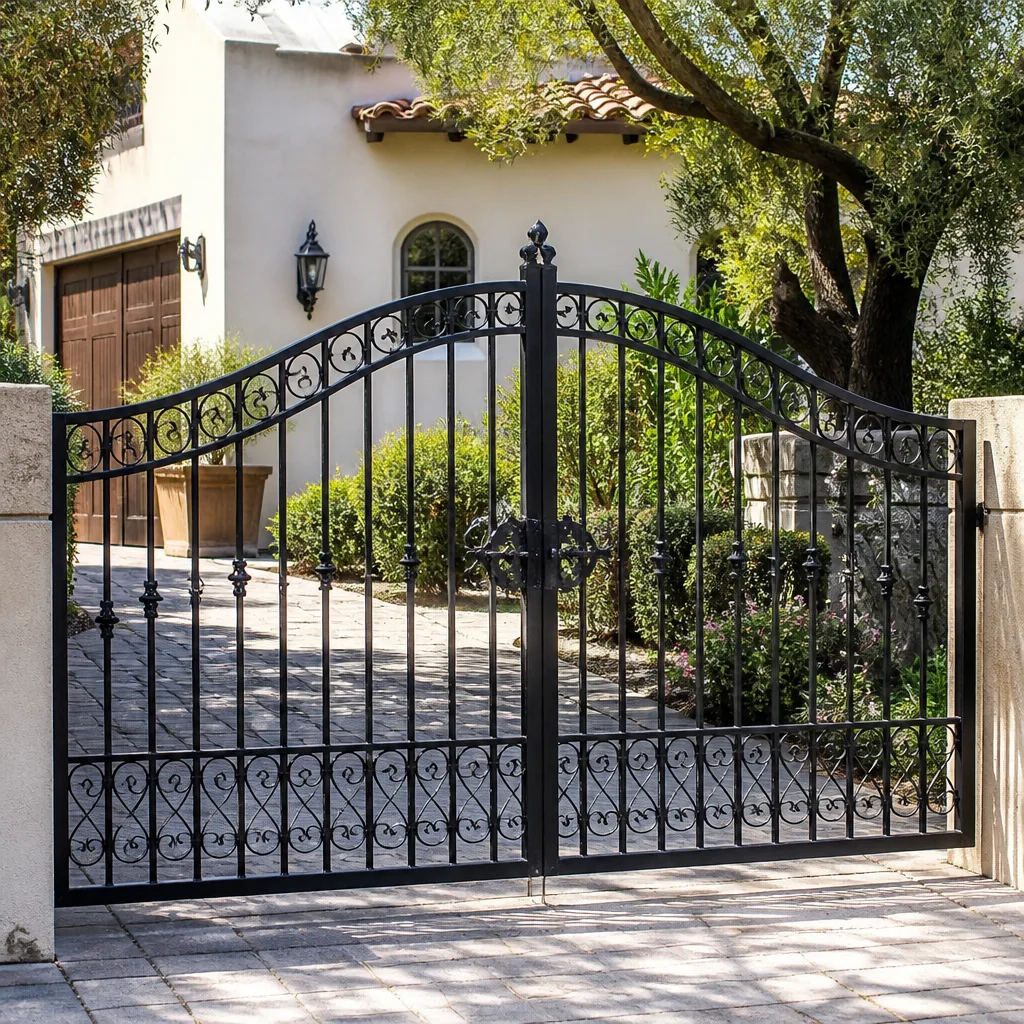 Wrought iron
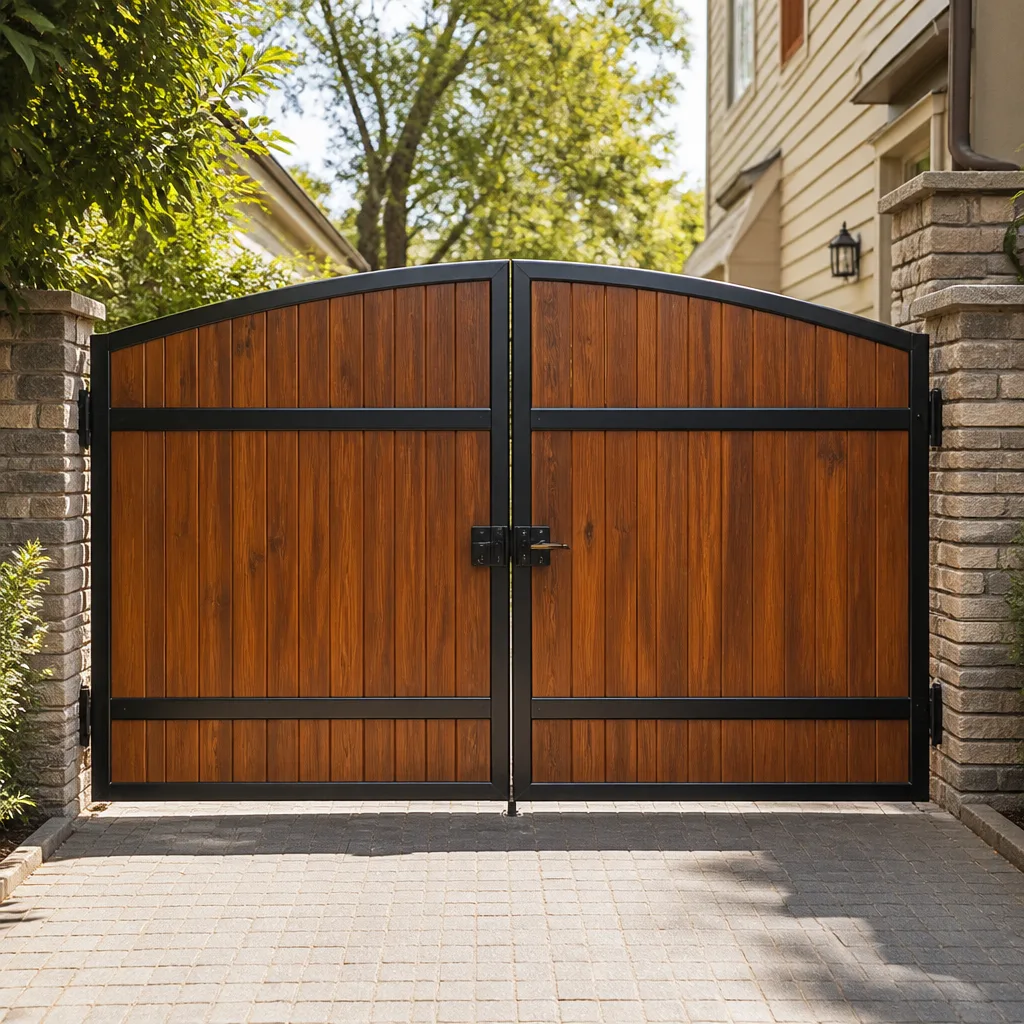 Wood & steel frame
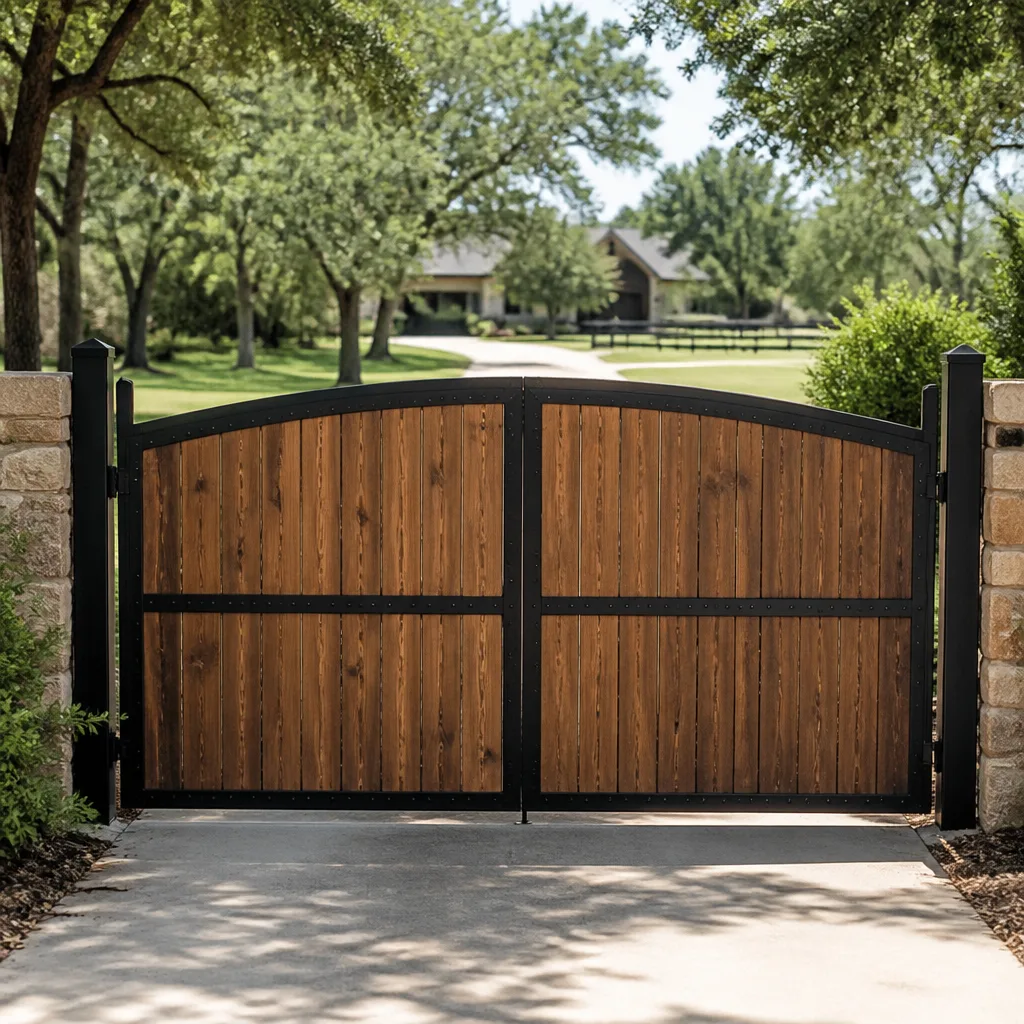 Farm & ranch
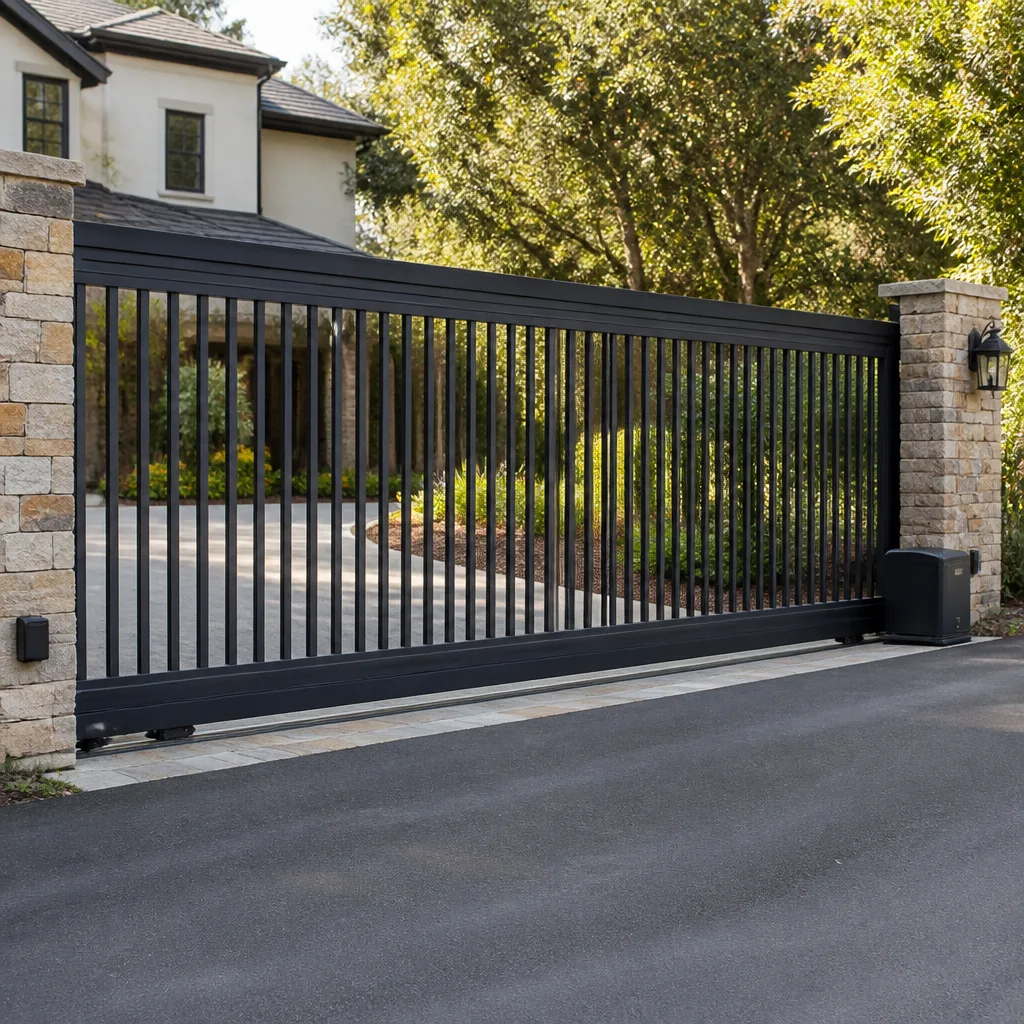 Sliding driveway gates
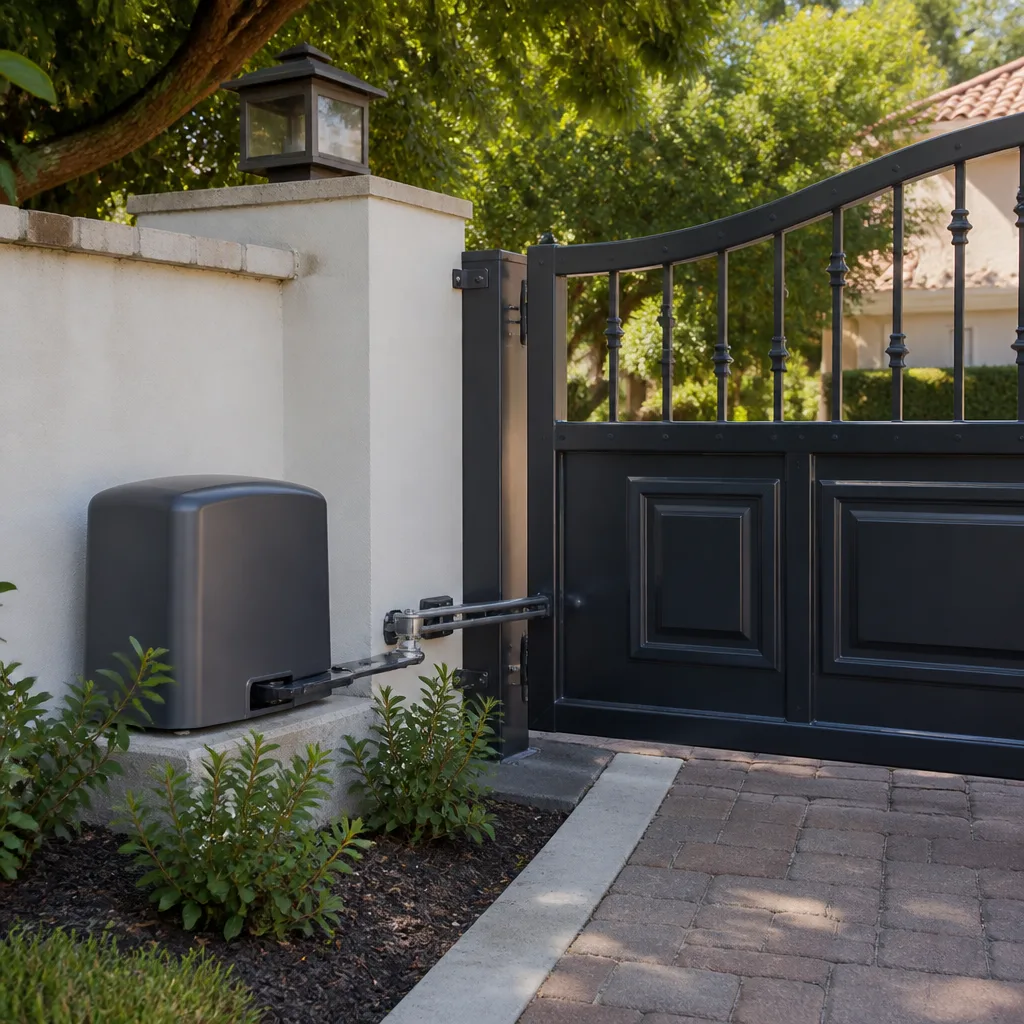 LiftMaster operators
Free on-site gate assessment - hinges, posts, and your LiftMaster or Nice gate operator checked before anything is quoted
The assessment is free and the quote is the invoice.
Get your free estimateGate Repair Permits, Codes & Inspections in FL: What You Need to Know
Palm Beach County requires a building permit for most automatic gate operator installations, but the line between a permit-triggering structural change and a like-for-like repair is murkier than most homeowners realize. Contractors sometimes exploit that ambiguity, skipping the inspection process and leaving the legal exposure with the property owner. In West Palm Beach, an unpermitted gate installation or operator change typically surfaces years later, at the worst possible moment: during a home sale, when a buyer’s inspector flags it and the seller is forced to correct it before closing. This guide covers exactly when permits are required under Florida code, what inspectors check, how to verify permit history before you buy, and who bears responsibility when work fails inspection.
Styles & brands we work with
Quick Answer
In Florida, automatic gate operators must meet UL 325 safety standards, and most new installations or operator replacements require a building permit from your local jurisdiction. In West Palm Beach, Palm Beach County enforces the Florida Building Code, which adopts ASTM F2200 for gate structure and requires entrapment protection on every automatic vehicular gate. A simple repair like replacing a limit switch or a worn wheel typically does not require a permit, but any modification to the gate frame, post anchors, or operator mounting usually does.
Table of Contents
- Permit Thresholds in Palm Beach County: What Triggers Review
- Florida Building Code and Gate Safety Standards: UL 325 and ASTM F2200
- What a Palm Beach County Gate Inspection Actually Checks
- How to Look Up Permit History Before You Buy a Home
- Contractor Responsibility vs. Homeowner Responsibility
- What Happens When Unpermitted Gate Work Is Discovered
- What Permits Cost and How Long They Take in West Palm Beach
- Common Mistakes to Avoid
- When to Call a Professional
- Frequently Asked Questions
- The Bottom Line
Permit Thresholds in Palm Beach County: What Triggers Review
Palm Beach County’s building department treats automatic gate operators as part of the building’s electrical and structural systems, not as simple appliances. That means most new operator installations require a permit, and the same applies when an existing operator is replaced with a different model that changes the mounting configuration or electrical load. The county’s threshold is straightforward: if the work involves new wiring, new conduit, new post anchoring, or a change to the gate’s physical operation, a permit is expected. If you’re installing a barrier arm operator where none existed before, a permit is required, full stop.
What qualifies as like-for-like maintenance? Replacing a failed circuit board with the identical part, swapping out a worn hinge, installing a new limit switch, or replacing the same model operator on the existing mounting plate generally falls outside permit review. The key word is identical. Change the operator brand from a BFT to a Linear unit, and the mounting pattern, electrical draw, and safety sensor layout all change. That crosses from maintenance into modification, and Palm Beach County expects a permit for it. In our experience in West Palm Beach, homeowners are often told by contractors that “it’s just a swap” when the new operator requires a different bracket system. The contractor saves a day of paperwork, and the homeowner inherits an unpermitted installation that resurfaces at sale.
Structural gate repairs follow the same logic. Replacing a bent wheel or a rusted hinge pin is maintenance. Cutting and re-welding a gate frame member, replacing a post that has shifted, or converting a swing gate to a slide gate is a structural change that requires permit review under the Florida Building Code. The code doesn’t leave much room for interpretation on structural work; Palm Beach County enforces it consistently, and the county’s inspectors see hundreds of gate installations each year. They know what a permitted job looks like, and they know the signs of work done without one.
Florida Building Code and Gate Safety Standards: UL 325 and ASTM F2200
Two standards govern automatic gates in Florida, and both are incorporated by reference into the Florida Building Code. The first is UL 325, which covers the safety of automatic gate operators and door operators. The second is ASTM F2200, which sets construction requirements for vehicular gate assemblies. If you’re having gate work done in West Palm Beach or anywhere else in Florida, both standards apply, and a compliant installation must satisfy both. They are not interchangeable, and a gate that passes one does not automatically pass the other.
UL 325: Entrapment Protection Requirements
UL 325 is the standard that governs how an automatic operator must behave when something, or someone, enters the gate’s path. Since 2000, every automatic gate operator installed in the United States must include two independent means of entrapment protection. On a swing gate, that typically means an inherent entrapment sensor built into the operator, plus external safety devices like photo eyes, edge sensors, or a reverse loop detector. On a slide gate, the operator must be equipped with a Type A inherent sensor or a Type B1 or B2 external sensor, depending on the gate’s design and travel path. A Palm Beach County inspector will test these protections during a permitted installation. If the gate doesn’t reverse or stop under pressure, the installation fails inspection, and the contractor must correct the deficiency before the permit closes.
The practical takeaway: a gate operator that physically opens and closes is not necessarily a code-compliant operator. Many unpermitted installations skip the photo eyes or fail to install a safety edge on the gate’s leading edge. That omission is not cosmetic. It is the difference between a gate that stops when a child or pet enters the path and one that keeps pushing. The Florida Building Code requires entrapment protection on every automatic vehicular gate, regardless of whether the gate is at a single-family home, an HOA community, or a commercial property. There is no residential exemption.
ASTM F2200: Gate Structure and Construction
ASTM F2200 addresses the gate itself rather than the operator. It sets requirements for gate frame construction, picket spacing, post strength, and the way a gate is supported. A common failure point in Florida is the gate post. The standard requires posts to be sized and set to support the gate’s weight and wind load without deflection. In West Palm Beach, where summer storms bring sustained wind and the coastal environment accelerates corrosion, posts that are undersized or set in shallow concrete eventually lean, dragging the gate out of alignment and straining the operator. ASTM F2200 also governs picket spacing to prevent entrapment. If a gate’s pickets are spaced wide enough for a child to pass a limb through, the gate doesn’t meet code, and a gate replacement should not be installed without correcting the spacing.
We see this constantly in West Palm Beach neighborhoods with older homes: a beautifully fabricated aluminum gate with picket spacing that passed visual review when it was handmade, but would not pass an ASTM F2200 inspection today. When a homeowner wants to automate an existing gate, the inspector reviews the gate itself, not just the operator. If the gate fails ASTM F2200, the permit can’t close until the gate is modified or replaced. That’s a surprise most homeowners don’t plan for, and it’s one reason a written estimate that accounts for the gate’s structural condition matters more than a lowball bid that assumes everything will pass. For Gate Repair Warning Signs: A West Palm Beach Homeowner’s Reference Guide, see our detailed walkthrough.
What a Palm Beach County Gate Inspection Actually Checks
A gate inspection in Palm Beach County is not a drive-by. The inspector walks the gate, tests the operator under load, and checks specific safety functions that most homeowners never think about until a permit is on their file. If you’re scheduling a permitted gate installation in West Palm Beach, expect the inspector to run through the following checklist, more or less in this order:
- Operator placement and mounting. The inspector verifies that the operator is mounted at the correct height and position relative to the gate’s travel path, with secure fasteners and no interference with manual operation. On a swing gate, the operator’s articulation point must align with the gate hinge; on a slide gate, the operator must be level and aligned with the rack.
- Entrapment protection zones. The inspector tests each sensor or edge device at the gate’s pinch points: the hinge side of a swing gate, the trailing edge of a slide gate, and the opening between the gate and the post or wall. If the operator doesn’t reverse when the sensor trips, the inspection stops there.
- Safety edge function. Where a safety edge is installed, the inspector physically presses it to confirm the gate reverses. A dead edge battery or a broken edge connection is a routine failure item.
- Warning signage. ASTM F2200 and UL 325 both require warning signs on automatic gates. The inspector checks for legible signage on both sides of the gate, placed at a height visible to pedestrians and drivers. Missing or faded signage is a correction item.
- Electrical work. The inspector reviews the power source, conduit, grounding, and any disconnect switch or outlet installed for the operator. Work that wasn’t done by a licensed electrician, or that shows exposed wire or improper conduit, fails inspection until corrected.
- Gate operation under load. The gate is cycled open and closed several times while the inspector watches for hesitation, binding, or drift. A gate that loses alignment mid-cycle indicates a structural problem the operator installation didn’t address.
The inspection is not an adversarial review. It’s a confirmation that the gate and operator will not injure someone. Homeowners in West Palm Beach who hire a contractor that regularly pulls permits for gate work rarely fail these inspections, because the contractor knows what the county will test. The failures usually come from work done by a generalist who installs the operator, tests it once, and never thinks about the inspector’s checklist.
How to Look Up Permit History Before You Buy a Home
Before you buy a home in West Palm Beach, the condition of the gate matters less than the paper trail behind it. An automatic gate with a newer operator and no permit on file is a liability, not an asset. The buyer’s inspector will flag the discrepancy, and the seller becomes responsible for the correction. If you’re on the buying side, finding that permit gap before you sign gives you leverage. If you’re on the selling side, finding it before you list gives you time to correct it without a closing deadline hanging over you.
Palm Beach County maintains an online permit search tool through its building department. You can search by property address and view every permit pulled for that parcel, including permits for fences, gates, and electrical work. The search is free, and it’s the first thing any thorough buyer’s agent or real estate attorney will run. Here’s the process, step by step:
- Go to the Palm Beach County Building Department’s permit search portal. Select “Permit Search” and enter the property address. Do not rely on a Google search to find this tool; use the county’s official site, since third-party aggregators often show incomplete permit data.
- Search the full permit history. Look for any permit categorized under “automatic gate,” “fence,” “barrier,” or “electrical.” A gate installation might be bundled under an electrical permit if the operator required a new circuit.
- Compare the permit dates against the gate’s apparent age. If the operator on the property is a Viking model that was manufactured in 2019, but the newest permit on file is from 2012, the operator was likely installed without a permit.
- Check the permit status. A permit that was pulled but never closed, meaning the final inspection was never passed, is nearly as problematic as no permit at all. An open permit leaves the work in limbo and can complicate a sale.
- Ask the seller or listing agent directly. If the permit history shows a gap, ask for documentation. A licensed contractor can pull a new permit to review and certify the existing installation in some cases, a process called a retrospective permit review.
Missing permits don’t just affect the closing. They affect title insurance. Some title insurers will issue an exception for unpermitted work, meaning any future claim related to that work is excluded from coverage. That exclusion attaches to the property, not the owner, so it follows the gate through the sale and beyond. The cleanest solution when buying or selling a home with an automatic gate in West Palm Beach is to close the permit gap before the transaction becomes time-sensitive.
Contractor Responsibility vs. Homeowner Responsibility
When a permit is pulled for gate work, the named contractor is the party of record. That means the contractor’s license number is attached to the permit, and the contractor is responsible for scheduling inspections, correcting deficiencies, and closing the permit. The homeowner’s role is to provide access and, in most cases, pay the permit fee. But Florida law, and Palm Beach County practice, place the long-term liability on the property owner, not the contractor. If the permit is never closed, the homeowner owns the problem. If the contractor disappears and the permit stays open, the homeowner still owns the problem. That’s why the choice of contractor matters more than the bid price.
Here’s what each party is responsible for, in practical terms:
- Contractor’s responsibility: Pulling the correct permit before work begins, performing the work to Florida Building Code and the two referenced standards, scheduling and attending all inspections, correcting any deficiencies the inspector identifies, and closing the permit with the county.
- Homeowner’s responsibility: Providing accurate property information, granting access for inspections, paying the permit fee, and verifying, before final payment, that the permit has been closed. Many homeowners never check, and they don’t learn the permit remained open until years later.
- Shared responsibility: If the work fails inspection due to a pre-existing condition, such as a gate that fails ASTM F2200 because of its original construction, the correction typically falls to the homeowner. The contractor installed the operator correctly, but the gate itself was never code-compliant, and no operator can fix that.
One scenario we see repeatedly in West Palm Beach: a homeowner hires a contractor to replace an old swing gate operator. The contractor installs a new Ghost Controls unit but never pulls a permit. Three years later, the gate fails, and the homeowner calls a different company. The new technician confirms that the operator was installed without a permit, explains the liability, and the homeowner is now responsible for a retrospective permit review. The original contractor’s warranty is worthless, because the only remedy was the installation itself, and the new contractor is now correcting someone else’s permit omission at the homeowner’s expense. This is the precise situation a written price and a written guarantee exist to prevent.
What Happens When Unpermitted Gate Work Is Discovered
Discovery of unpermitted gate work in West Palm Beach rarely happens at a convenient time. The most common trigger is a buyer’s inspection during escrow. The inspector notes a newer operator with no matching permit, the buyer requests a correction, and the seller is suddenly negotiating a retrofit under deadline pressure. The second most common trigger is an insurance claim. If a vehicle strikes the gate or a storm damages the operator, the insurance adjuster will ask for the permit history. No permit on file means the claim can be denied, because the damage involves equipment that was never approved for installation.
The correction process itself is not complicated. A licensed contractor pulls a permit to review the existing installation, checks the operator against UL 325 requirements, verifies the gate against ASTM F2200, and performs whatever corrections are needed. If the installation is sound, the inspector signs off and the permit closes. If it isn’t sound, the homeowner pays for the corrections. The cost ranges widely depending on what the inspector finds. A simple correction like adding warning signage or a photo eye might run $150 to $400 in West Palm Beach. Replacing a non-compliant gate structure because the picket spacing fails ASTM F2200 can run into the thousands. The longer unpermitted work sits uncorrected, the more likely the correction cost grows, because gates and operators degrade in the Florida heat and salt air.
There is also a code enforcement component. Palm Beach County has the authority to issue a notice of violation for unpermitted work, though in practice, the county typically reserves that authority for commercial properties and egregious residential cases. For a single-family homeowner in West Palm Beach, the more pressing concern is the sale contingency, the insurance exclusion, and the quiet fact that an unpermitted gate is, technically, an illegal installation that the owner has been using for years without knowing it.
What Permits Cost and How Long They Take in West Palm Beach
Gate permit fees in Palm Beach County are relatively modest. A typical automatic gate or operator permit runs between $150 and $500 depending on the scope of the work, the valuation of the installation, and whether electrical work is included. Some installations require both a building permit and a separate electrical permit, which adds a second fee. The permit itself is not the expensive part of the process. The expensive part is the correction work when an installation fails inspection, and the expensive part of skipping the permit is the cost of fixing the record later.
Timeline matters because inspections don’t happen on demand. Palm Beach County schedules inspections on a next-business-day basis in most cases, but volume can push that window out. A straightforward operator replacement with a clean installation typically closes its permit within 7 to 14 days of the work being completed. That includes the initial inspection and any minor corrections. A complex installation involving a new gate structure, entrapment protection retrofits, or ASTM F2200 corrections can take 30 to 60 days from start to closed permit. If you’re planning a new gate installation in West Palm Beach ahead of a specific date, a holiday party, an HOA deadline, a move-in, factor the permit timeline into the schedule. A contractor who promises a permitted installation in three days is not being honest about how Palm Beach County works.
We recommend that West Palm Beach homeowners treat the permit as a line item, not an afterthought. Ask the contractor to include the permit fee in the written estimate. Ask for the permit number after the work starts. Check the county’s permit portal before paying the final invoice. These steps take a few minutes, and they close the loop that so many homeowners leave open.
Common Mistakes to Avoid
- Trusting a contractor who says “you don’t need a permit for that.” Any contractor who tells you an automatic operator installation doesn’t need a permit in Palm Beach County is either misinformed or intentionally cutting corners. Get it in writing, then call the county yourself to confirm. The county’s answer will settle it.
- Confusing like-for-like repair with operator replacement. Replacing a circuit board, a limit switch, or a wheel is maintenance. Swapping the operator for a different model, even a similar one from another brand like BFT or Linear, changes the installation. If the mounting or wiring changes, a permit is required.
- Skipping the permit history check when buying a home. The automatic gate looks fine, works fine, and the seller says it was “just serviced.” None of that tells you whether the operator was permitted. Check the county portal before you sign anything.
- Paying the final invoice before the permit closes. The contractor’s job isn’t done when the gate opens and closes. It’s done when the county signs off. Verify the closed permit before releasing final payment. Once paid, your leverage is gone.
- Assuming the gate itself passes code because the operator does. ASTM F2200 governs the gate structure, and it has nothing to do with the operator. An old decorative gate with wide picket spacing or undersized posts may fail even if the operator is brand new and UL 325 compliant.
- Ignoring entrapment protection as an “extra.” Photo eyes, safety edges, and reverse loops are not optional accessories in Florida. They are mandatory code requirements. If a quote doesn’t include them, the quote doesn’t include a compliant installation.
- Waiting for the home sale to discover the permit gap. The worst time to learn that your gate operator was installed without a permit is during escrow, when you’re negotiating under deadline and the buyer holds the leverage. Check your own property’s permit record now. It costs nothing and takes ten minutes.
When to Call a Professional
If your automatic gate is being sold with your home, or if you’re buying a home in West Palm Beach with an existing automatic gate, a professional permit review is the single most useful thing you can spend money on. If your operator was installed by a contractor who didn’t pull a permit, or if you can’t determine whether one was pulled, a licensed gate contractor can evaluate the installation, identify code deficiencies, and correct the record before it becomes a closing problem. If your gate shows signs of structural distress, leaning posts, binding travel, a gate that scrapes the ground, mismatched operator mounting, those are ASTM F2200 concerns that no driveway-level fix will resolve. Gate Repair services in West Palm Beach include free estimates, permit reviews for existing gates, and full permitted installations for new work. Call (728) 203-2413.
Frequently Asked Questions
A simple repair like replacing a wheel, hinge, or limit switch does not require a permit in Florida. A structural repair, a new operator installation, or an operator replacement that changes the mounting or electrical configuration does require a permit, and in Palm Beach County that permit is pulled through the county building department. When in doubt, call the county or ask a licensed gate contractor to check the specific scope against current code. For a free permit review of your existing gate in West Palm Beach, call (728) 203-2413.
Gate and operator permits in Palm Beach County typically cost between $150 and $500 depending on the scope of the work, the valuation, and whether a separate electrical permit is required. The permit fee is a small fraction of the total project cost, and skipping it creates a far larger liability when the unpermitted work surfaces at a sale or insurance claim. Ask any contractor to include the permit fee in the written price so the number is transparent from the start.
UL 325 is the safety standard for automatic gate operators that sets requirements for entrapment protection, meaning the gate must stop or reverse if something enters its path while it’s moving. The Florida Building Code adopts UL 325 as mandatory for all automatic vehicular gates, and every permitted installation in Palm Beach County is inspected against it. A gate that opens and closes but doesn’t meet UL 325 is an unsafe gate, and it will fail inspection if it’s ever reviewed.
ASTM F2200 is the construction standard for vehicular gate assemblies, covering gate structure, picket spacing, post strength, and hardware. It applies to any automatic gate in Florida, including an existing gate being automated for the first time. If your West Palm Beach home has an older gate with wide picket spacing or undersized posts, it may not pass ASTM F2200 when an operator is added, and the correction is the homeowner’s responsibility even if a contractor is installing the operator.
Yes. Palm Beach County offers a free online permit search tool through its building department portal. Enter your property address and review every permit on file, including any related to fences, gates, or electrical work. If the operator on your gate is newer than the most recent permit, the installation was likely unpermitted. If you need help interpreting what you find, a licensed gate contractor can review the record with you. Call (728) 203-2413 for guidance in West Palm Beach.
The buyer’s inspector will likely flag the unpermitted gate and the buyer will request a correction before closing. You will then need a licensed contractor to pull a retrospective permit, correct any code deficiencies, and get the county to sign off. The cost depends entirely on what the inspector finds, from a few hundred dollars for missing signage to several thousand for structural corrections. If you’re planning to list your West Palm Beach home, check the permit history now so you can resolve issues before the closing deadline becomes leverage for the buyer.
The Bottom Line
Gate permits in Florida are not bureaucratic box-ticking. They are the enforcement mechanism for two safety standards, UL 325 and ASTM F2200, that exist to keep automatic gates from injuring people. In West Palm Beach, where automatic gates are common and the coastal environment punishes sloppy installations, the permit record is part of the property’s value. Check your own permit history before you have to. Choose a contractor who includes the permit in the written price and closes it before asking for final payment. And if you’re buying or selling, treat the gate’s paper trail with the same seriousness you’d give the roof or the electrical panel. The gate is a safety device, a structural component, and a legal record all at once. The paperwork should match the installation.
Written by Lonnie Burke, Owner at Carver Gate Repair West Palm Beach, serving West Palm Beach since 2008.
See the difference
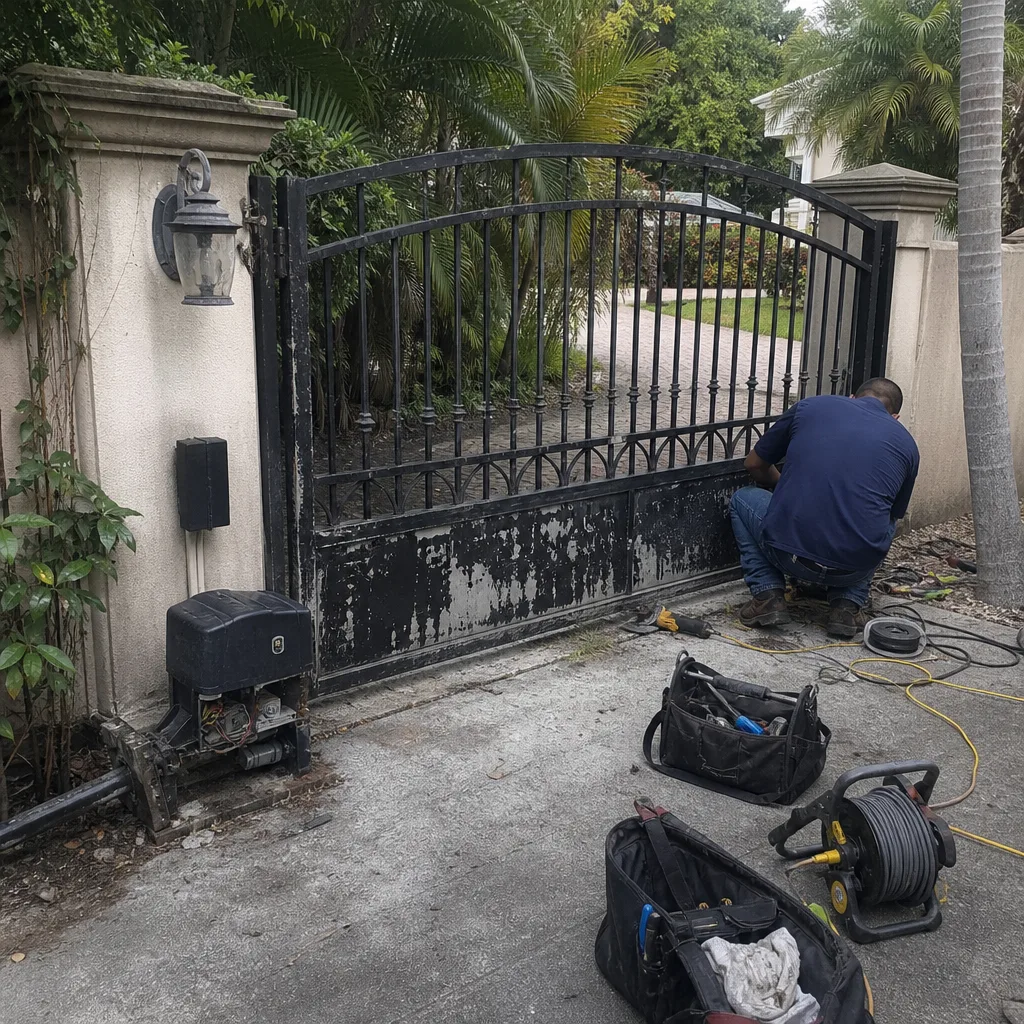 Before
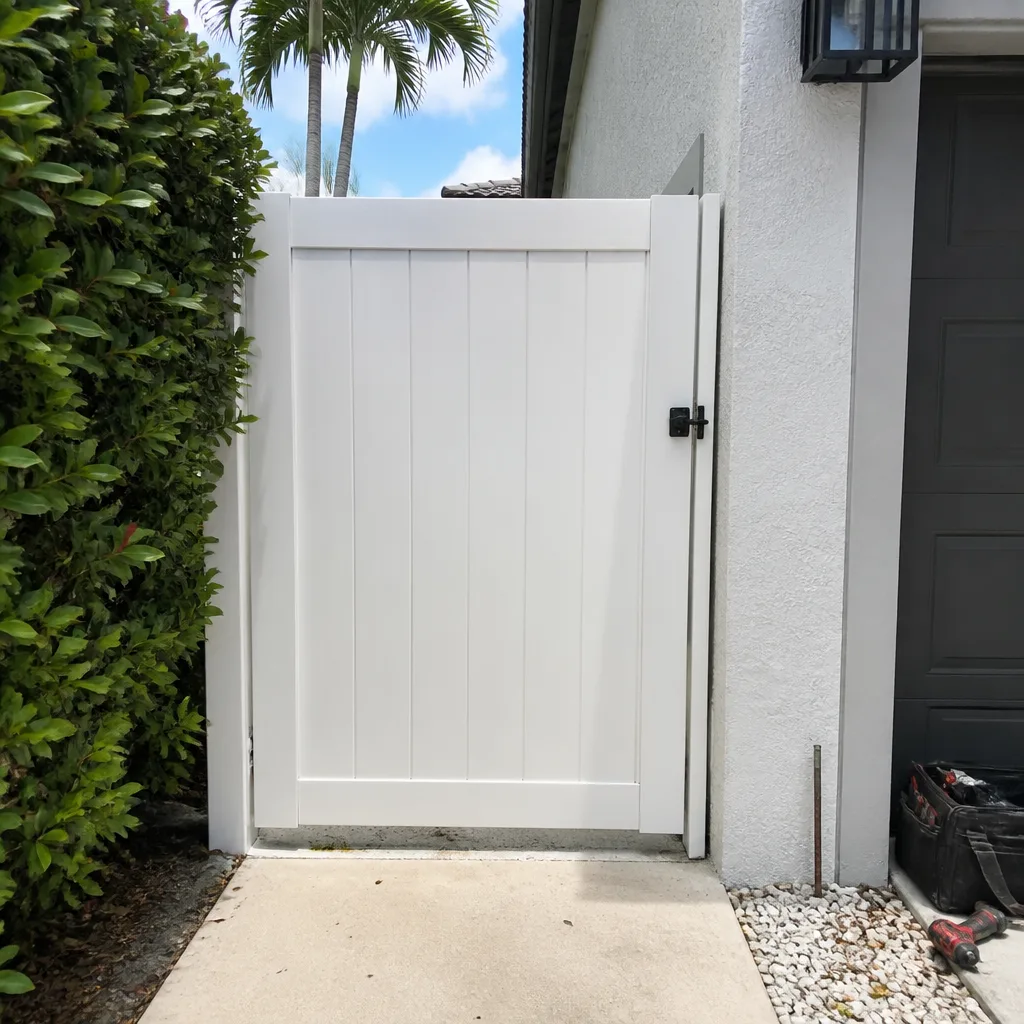 After
After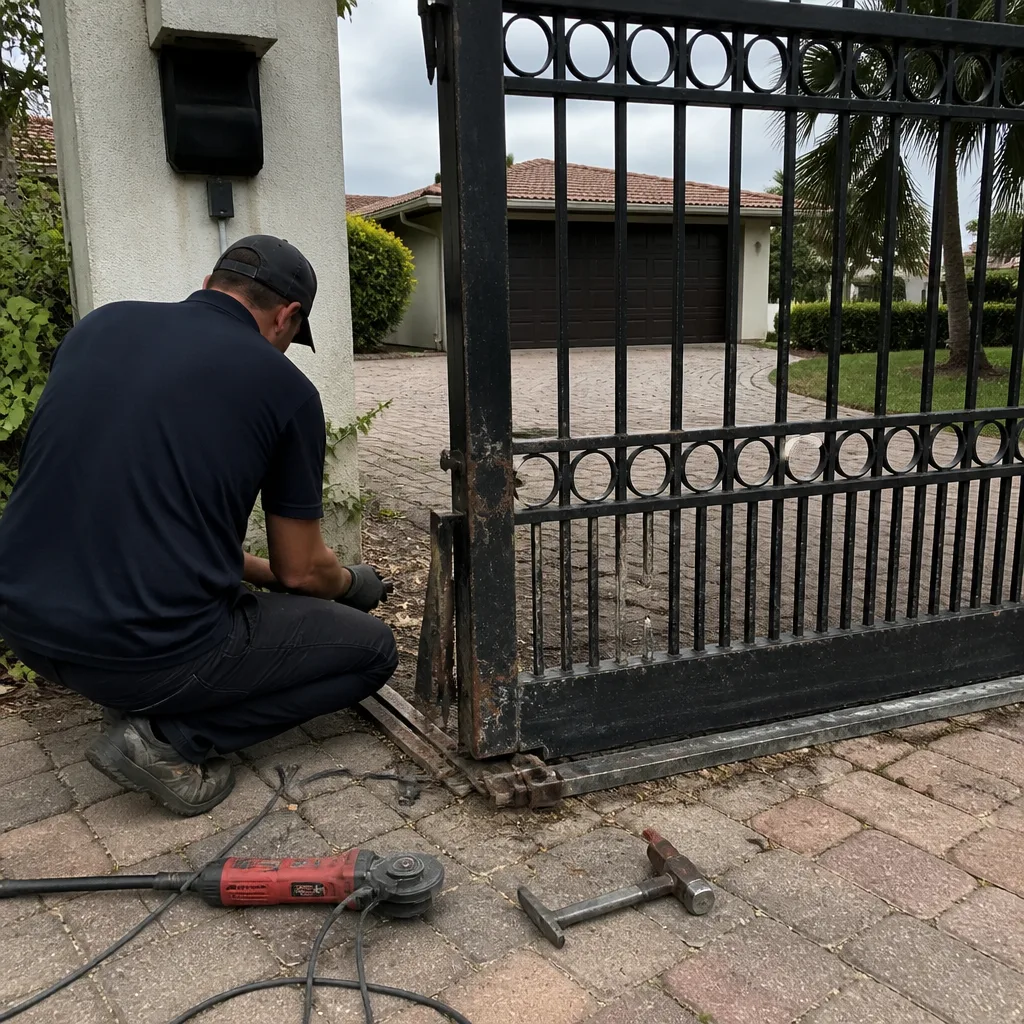 Before
 After
After Before
 After
After