
Last updated October 16, 2026
 Wrought iron
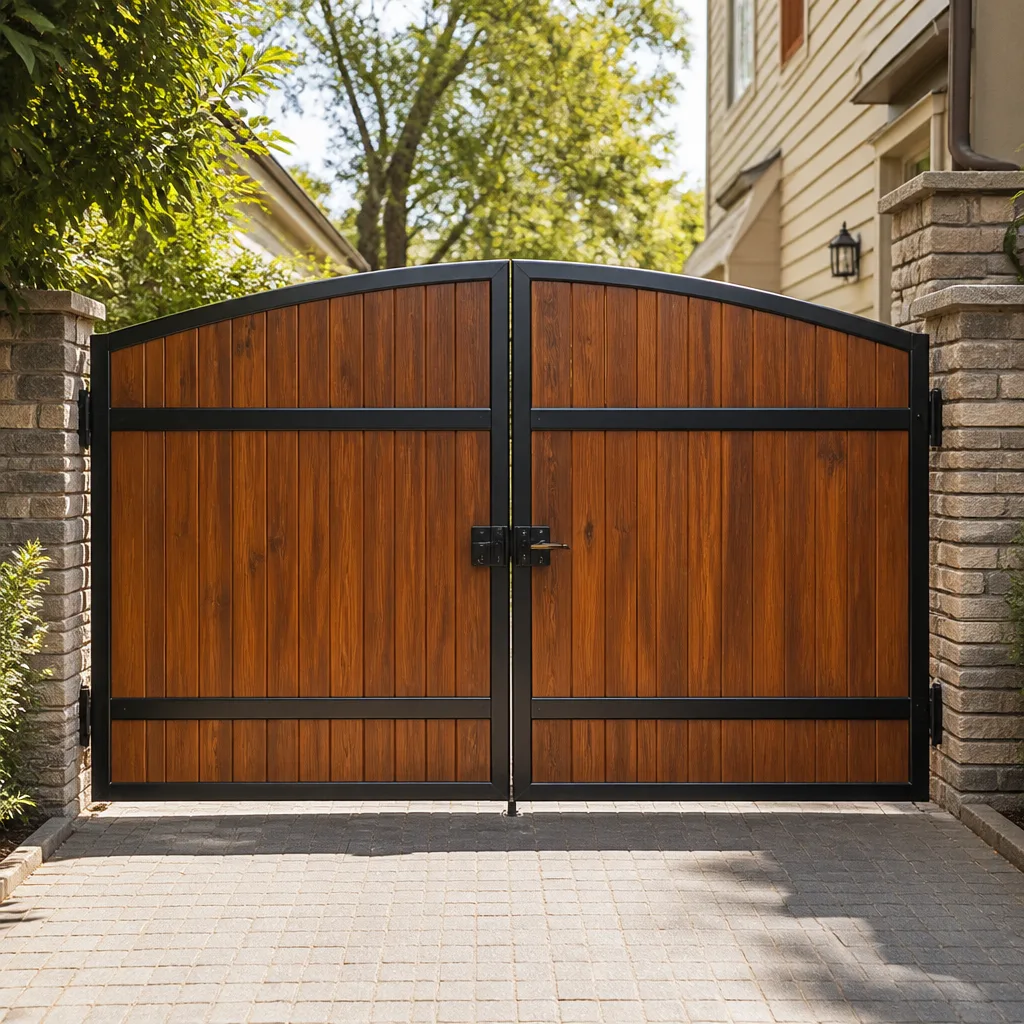 Wood & steel frame
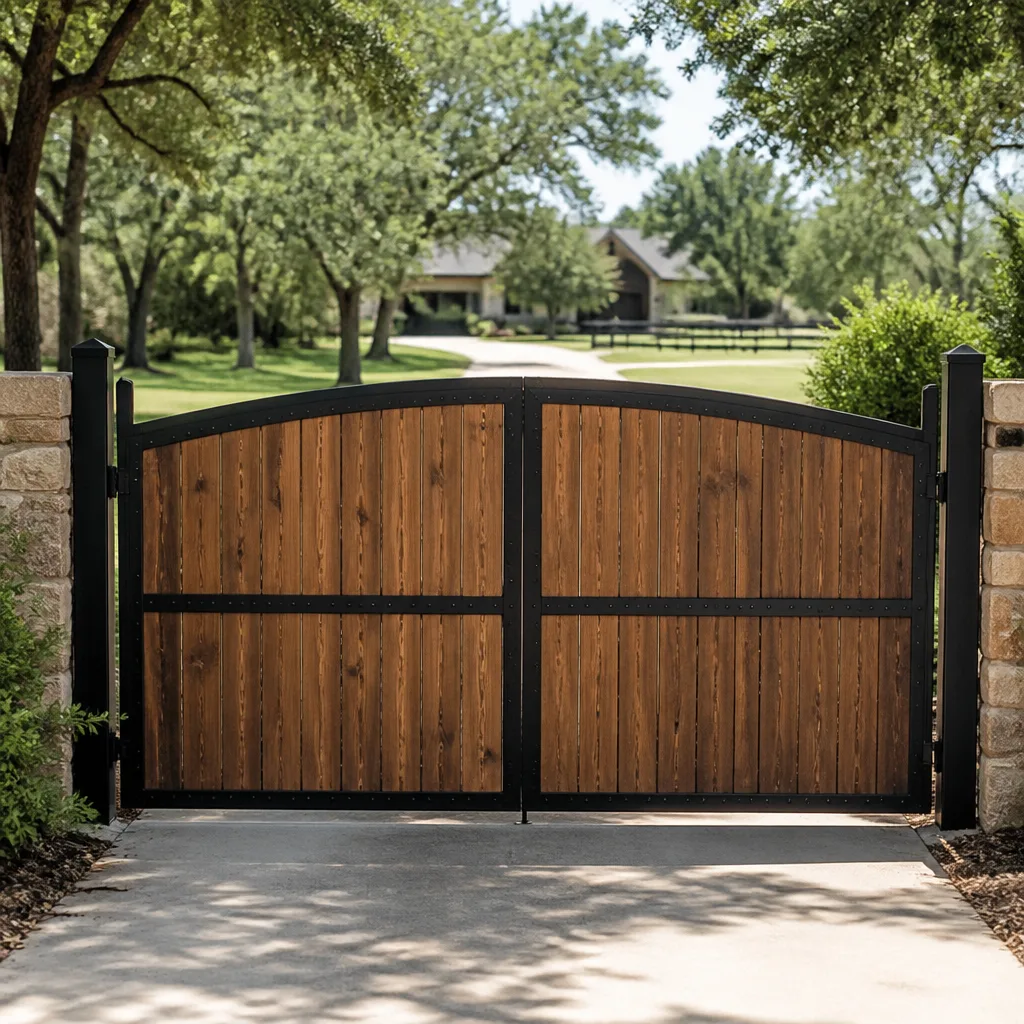 Farm & ranch
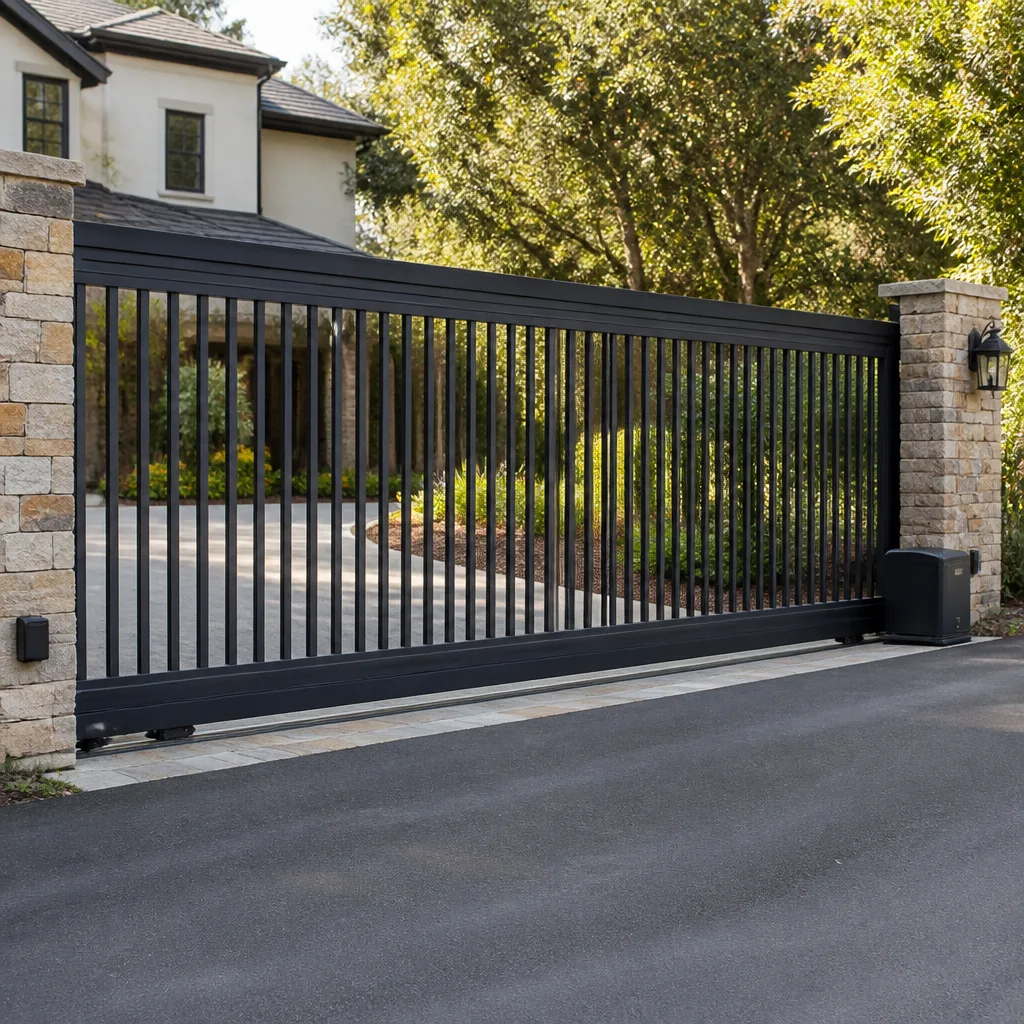 Sliding driveway gates
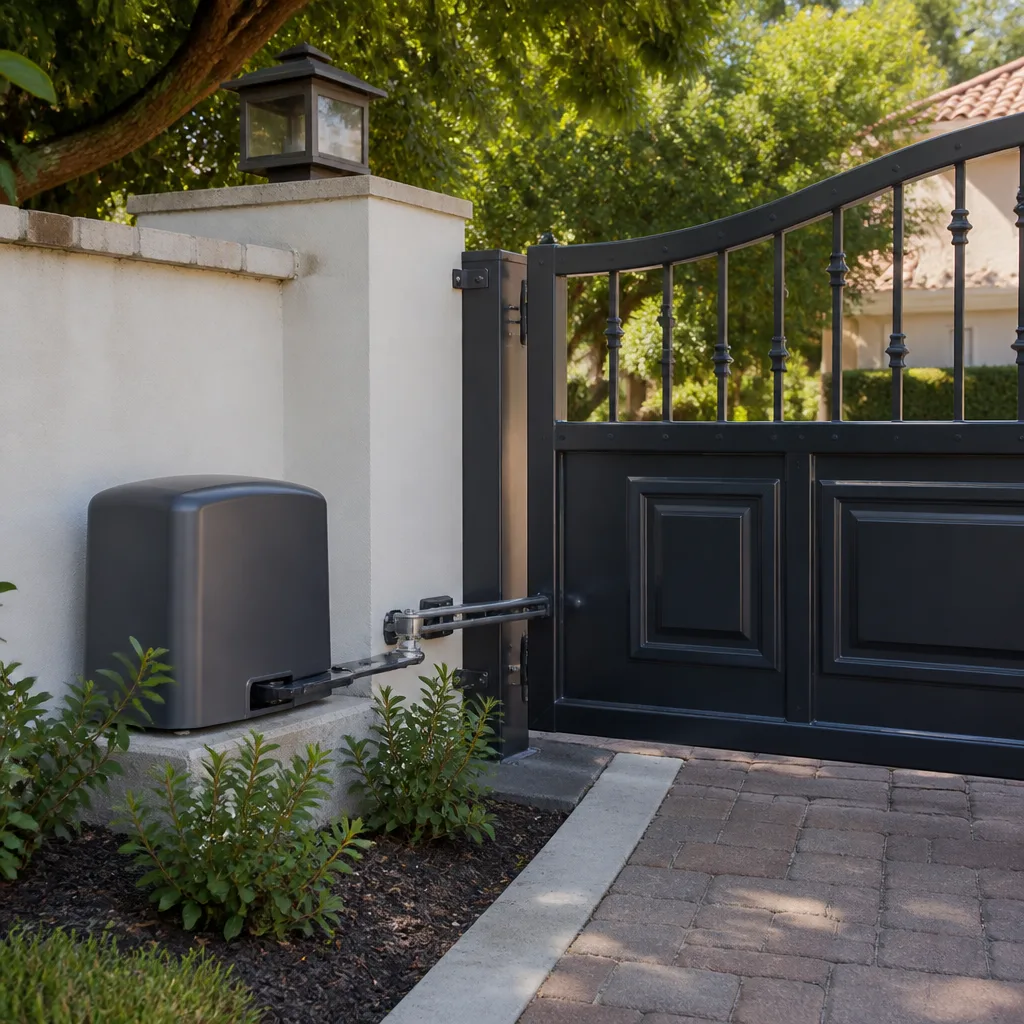 LiftMaster operators
Free on-site gate assessment - hinges, posts, and your LiftMaster or Nice gate operator checked before anything is quoted
The assessment is free and the quote is the invoice.
Get your free estimateGate Repair Maintenance Checklist for West Palm Beach Homeowners
A standard tube of white lithium grease, recommended by nearly every generic gate maintenance guide, accelerates corrosion on the zinc-plated hardware most common in coastal Florida installations. The right lubricant for West Palm Beach is a different product entirely, and that mismatch quietly shortens a gate’s service life by years. Most checklists circulating online were written for dry Midwestern climates and never account for salt-laden air, daily UV exposure, or the afternoon thunderstorms that roll through Palm Beach County from June through October. This guide is written specifically for the conditions your gate actually faces in West Palm Beach. You’ll learn what to check, how often to check it, and what pass/fail criteria actually matter, so you can catch small problems before they become emergency gate repair in West Palm Beach calls.
Quick Answer
A practical gate maintenance checklist for West Palm Beach homeowners breaks into three frequencies: monthly visual inspections of hinges, rollers, and safety sensors; quarterly cleaning and lubrication with a marine-grade, non-lithium product; and annual testing of battery backup voltage, loop detector response, and motor operator limits. The two tasks that matter most in this climate are rinsing salt residue from metal hardware and testing your battery backup before hurricane season. Skipping either one is the most common reason gates in West Palm Beach fail prematurely.
Styles & brands we work with
Table of Contents
- Monthly Gate Maintenance Checklist
- Quarterly Gate Maintenance Checklist
- Annual Gate Maintenance Checklist
- The Right Lubricant for Coastal Florida Hardware
- Battery Backup Testing Protocol
- Testing Safety Sensors and Loop Detectors at Home
- Documentation Habits That Protect Your Warranty
- Common Mistakes to Avoid
Monthly Gate Maintenance Checklist
Monthly checks are about catching what moves, what rubs, and what has started to corrode. In West Palm Beach, the monthly check is also your first line of defense against salt buildup. A gate that goes one month between inspections in this climate can develop surface rust on unprotected hardware, especially within a mile of the Intracoastal or the Atlantic. Here is what to check every month, with pass/fail criteria you can apply in about ten minutes:
Visual Inspection
- Hinges and pivot points: Look for rust staining, flaking metal, or a chalky white residue on zinc-plated hardware. Chalky white is early zinc corrosion, and it means the protective plating is failing. Pass: hardware is clean and dry. Fail: any visible rust or white powder.
- Gate frame and pickets: Check for bubbling paint, rust freckling, or loose fasteners. On aluminum gates, look for pitting at weld points. Pass: frame is solid with no movement at joints. Fail: any crack, loose bolt, or rust that has broken through the finish.
- Rollers and track (for sliding gates): Run the gate and watch for wobble, hesitation, or a grinding sound. Pass: gate moves smoothly along the full track. Fail: rollers skip, bind, or squeal.
- Wheels and casters (for cantilever and swing gates): Check tire wear on gate wheels and confirm the wheel spins freely. Pass: no flat spots, no debris wrapped around the axle. Fail: wheel does not spin by hand or has visible cracking.
- Safety edges and photo eyes: Wipe a dry cloth across each sensor lens. Salt film and pollen accumulate on these lenses within weeks in West Palm Beach. Pass: lens is clear. Fail: lens is hazy or caked with residue.
Clearance and Ground Contact
Swing gates in West Palm Beach sit over grass, pavers, or shell rock. All three shift. Check that the gate clears the ground by at least 2 inches at its lowest point across the full arc of travel. If you see a new scrape mark on the driveway or a worn patch in the grass, the gate has settled. That settlement loads the hinges unevenly and wears the operator faster. On sliding gates, check that the track is clear of sand, landscape debris, and palm fronds. Sand is abrasive inside rollers and on the gate track’s guide wheels, and it works like sandpaper during every open and close cycle.
If you find a fail on any monthly item, note the date and the condition. One fail on a hinge is usually a simple fix. Two or three fails across different components is the pattern we see right before a gate motor repair becomes necessary.
Quarterly Gate Maintenance Checklist
Quarterly maintenance is where most West Palm Beach gates get either extended life or quietly shortened life. This is the cadence for cleaning, lubricating, and checking the components that fail gradually rather than suddenly. Plan for 45 minutes to an hour. If you have an automated gate, this is also the right interval to run a full cycle test with the operator.
Cleaning Protocol
- Rinse metal surfaces with fresh water. Use a garden hose, not a pressure washer. Pressure washers force water into bearing seals and electrical enclosures. The goal is to remove salt film and airborne grit, not blast paint off.
- Wipe down hinges, rollers, and operator arms with a clean microfiber cloth. Dry the hardware after rinsing. Leaving hardware wet in humid air just re-deposits the salt film you rinsed off.
- Clean the track on sliding gates. Remove debris, then wipe the track dry. Do not oil a sliding gate track. Oil on the track attracts sand, and sand in the track is the most common cause of sliding gate hesitation we see in West Palm Beach subdivisions.
- Inspect and clean the operator housing. Look for ant nests, mud dauber tubes, or gecko droppings around the control board and wiring. South Florida insects and reptiles find their way into operator boxes, and their residue corrodes terminals. Pass: housing is clean and dry inside. Fail: any insect activity, moisture, or corrosion on terminals.
Hardware Torque Check
Every quarter, check the tightness of the bolts on hinge brackets, gate wheel axles, and the operator mounting plate. In West Palm Beach, daily thermal expansion and contraction loosens hardware faster than in climates with smaller temperature swings between afternoon heat and overnight cooling. A 3/8-inch bolt that was tight in January can be loose by April without anyone touching it. Pass: bolts do not turn with moderate hand pressure on a wrench. Fail: any bolt that moves. A loose hinge bolt transfers all the gate’s weight to the remaining bolts and accelerates wear on the operator.
Limit Switch Verification
Run the gate through a full open and close cycle. Watch the limit switch behavior. The gate should stop firmly at both ends of travel without slamming and without stopping short. If the gate reverses immediately after reaching the close limit, the limit switch is set too far or the gate has shifted. Limit switches on LiftMaster operators are straightforward to adjust, but on FAAC and BFT units, the limit settings are often in the control board programming rather than a physical switch. If you are not certain which system you have, note the operator brand and model on your Carver Gate Repair West Palm Beach home service log. That record saves time on any future repair call.
Annual Gate Maintenance Checklist
The annual check is the one that prevents cascading failures. It is more thorough and includes items that appear fine month after month until they suddenly are not. Schedule this before May if you can. That gets the gate ready for hurricane season, when wind loads and power interruptions stress every component at once.
Structural Integrity
- Check the gate’s level and plumb. Use a 4-foot level on the hinge post and the latch post. A post that has moved even a quarter inch out of plumb changes how the gate loads its hinges and how the latch engages. Pass: bubble centered both directions. Fail: any visible lean.
- Inspect welds on steel gates. Look for hairline cracks at weld joints, especially where the frame meets pickets or where the operator bracket attaches. Hairline cracks widen under repeated stress. Pass: no visible cracks. Fail: any crack, regardless of length.
- Check the latch and lock engagement. The latch bolt should seat fully into the strike without having to lift or push the gate. A latch that scrapes or hangs indicates the gate has sagged or the post has moved. Pass: latch engages with normal closing force. Fail: latch binds, needs lifting, or does not catch.
- Test the manual release. Disengage the operator and move the gate by hand through its full travel. It should move smoothly with consistent resistance. A gate that binds at one point in its travel points to a hinge or roller problem, not an operator problem. Pass: smooth, no binding. Fail: tight spots, grinding, or excessive effort.
Electrical and Control Systems
This is the section where high-tension springs and cables are not the issue, so do not attempt to adjust spring tension yourself. Springs under load can release violently and cause serious injury. The checks below are observational. If a spring, cable, or tension component fails a visual check, call a trained professional rather than attempting a fix.
- Photograph the control board. A clear photo, taken once a year, documents wire placement, DIP switch settings, and LED indicator states. If a repair is ever needed, that photo helps the technician restore settings fast and confirms what changed.
- Check all wire connections for tightness. Loose terminal screws are a common cause of intermittent operator faults. Pass: wires are secure with no burn marks or green corrosion. Fail: any loose wire, melted insulation, or corrosion at a terminal.
- Test the battery backup under load. Disconnect AC power to the operator (or switch the breaker off) and run a full open and close cycle on battery power alone. The gate should complete both directions without slowing noticeably. If the gate moves slowly on battery or stops mid-cycle, the battery is near end of life. See the battery section below for voltage thresholds.
- Verify ground continuity. In South Florida, lightning strikes near a gate can compromise the ground path. A compromised ground makes the operator board vulnerable to surge damage. If you are not comfortable checking continuity with a multimeter, this is a quick professional check.
The Right Lubricant for Coastal Florida Hardware
This is the section where most generic maintenance guides lead West Palm Beach homeowners wrong. The standard recommendation is white lithium grease. On coastal hardware, white lithium grease is the wrong call for most gate applications. Here is why, and what to use instead.
White lithium grease is a petroleum-based product that traps moisture against metal. In a dry climate, that is not a problem. In West Palm Beach, where relative humidity sits above 70% most of the year and salt is in the air, the grease film becomes a moisture trap. The zinc plating on common gate hardware gives way, and corrosion starts under the grease where you cannot see it until the hinge begins to bind. By the time a hinge is binding, the corrosion is already advanced.
The correct product for most gate hardware in this climate is a marine-grade synthetic lubricant designed for saltwater environments. Look for a product that lists saltwater or marine use on the label. These lubricants displace moisture rather than trapping it, and they do not wash off in afternoon downpours. Apply sparingly. A thin film is enough. Over-lubrication attracts sand and grit, and sand works like abrasive paste on hinge pins and roller bearings.
What to Lubricate
- Hinge pins and pivot points on swing gates
- Roller bearings on sliding and cantilever gates
- Gate wheel axle bushings
- Latch mechanism internal parts
- Operator arm pivot joints (on articulating arm operators)
What Not to Lubricate
- The track on a sliding gate. Track stays dry. Lubricant on the track turns into grinding paste when sand and shell dust settle in it.
- Photo eye lenses. Keep them clean and dry. Any oily film diffuses the beam and causes nuisance reversals.
- Electrical terminals or control boards. No lubricant of any kind belongs on electrical contact points.
- Limit switches. Many limit switches use sealed micro-switches. Adding lubricant can gum the mechanism and cause the switch to stick, which reads as an operator fault.
If you inherit a gate that has been greased with white lithium for years, remove the old grease with a degreaser and a stiff brush before applying the marine-grade product. The old grease has to come off before the new product can do its job. In our experience across West Palm Beach, gates that get the correct lubricant from day one routinely outlast identical gates with lithium grease by several years before the first hinge or roller replacement.
Battery Backup Testing Protocol
Every automated gate in West Palm Beach should have a functioning battery backup. Power interruptions here come from summer thunderstorms, tropical systems, and the occasional vehicle strike on a utility pole. When the power goes out, a dead battery backup means the gate stays closed or stays open, depending on its design. Neither is acceptable during an evacuation.
Most gate operators use sealed lead-acid batteries, often 12-volt units wired in series for 24-volt systems. The battery inside an operator ages faster in heat, and an operator box in direct South Florida sun can reach 130 degrees in July. That heat shortens battery life to 2 to 3 years in many cases, regardless of the brand printed on the battery.
Testing Procedure
- Locate the operator’s battery. On LiftMaster and Mighty Mule units, the battery is usually behind a separate cover on the operator housing. On FAAC and BFT units, it may be inside the main enclosure.
- Switch off the circuit breaker that powers the operator. This simulates a real power outage. Do not rely on the operator’s battery test button; many test buttons only check battery presence, not capacity under load.
- Run a full open and close cycle on battery power. The gate should move at normal speed in both directions. Pass: normal speed, full travel, no fault lights. Fail: slow movement, hesitation, mid-cycle stop, or fault indicators.
- Measure battery voltage with a multimeter. Check voltage at rest and while the operator runs the gate. A healthy 12-volt sealed battery should read between 12.6 and 12.8 volts at rest. During operation, voltage should stay above 11.5 volts. If rest voltage is below 12.4 volts, or voltage sags below 11 volts under load, the battery is aging and should be replaced before hurricane season. For 24-volt systems, double those figures: 25.2 to 25.6 volts at rest, staying above 23 volts under load.
- Restore AC power. Confirm the operator returns to normal operation and the battery begins charging.
Battery replacement is straightforward on most operators, but some units require the control board to be reprogrammed after a battery swap. On a gate installation in West Palm Beach, ask the installer to show you where the battery lives and how to read its voltage. That ten-minute walkthrough saves a service call later.
Testing Safety Sensors and Loop Detectors at Home
Safety sensors and loop detectors are the two components that stop a gate from closing on a car, a child, or a pet. When they work, nothing happens. When they fail, the gate can close on whatever is in its path. Testing both at home takes under five minutes and requires no tools.
Photo Eye and Safety Edge Testing
The photo eye is the small sensor mounted on each side of the gate opening, usually a few inches above the ground. When the beam between the two sensors is broken, the gate should stop and reverse. To test it:
- Start the gate closing.
- Stand to the side, not in the path, and pass your hand through the beam between the photo eyes while the gate is moving.
- Watch the response. Pass: the gate stops immediately and reverses direction. Fail: the gate continues closing, hesitates but continues, or only stops without reversing.
A safety edge works the same way but responds to physical contact. To test a safety edge, press firmly on the rubber edge strip while the gate is closing, again standing to the side. Pass: the gate stops and reverses on contact. Fail: the gate continues moving. If either test fails, stop using the automatic function and operate the gate in manual mode until the sensor is repaired. A gate that closes on a vehicle or a person is a liability, and sensor repair is not a DIY task, given the electrical and programming work involved.
Loop Detector Testing
The loop detector is buried wire under the driveway surface that senses the metal mass of a vehicle. It is what tells the gate to stay open while a car is sitting on the loop and what tells it not to close on a car that has just entered. Testing a loop detector from the outside is simple:
- Drive a vehicle onto the loop area and stop. The gate should remain open. Pass: gate stays open while the vehicle is on the loop. Fail: gate begins to close with the vehicle still on the loop.
- Drive off the loop and out of the gate’s path. The gate should close after the programmed delay. Pass: gate closes normally. Fail: gate closes immediately with no delay, or stays open indefinitely.
- If you have an exit loop, repeat the test from the exit side. Many West Palm Beach homes with driveway gates have both an entry and exit loop.
A failed loop detector often produces an intermittent symptom, working some days and failing others. Moisture in the saw cut where the loop wire sits, common during wet season in West Palm Beach, is a frequent culprit. If loop behavior changes after heavy rain, note the pattern and mention it when you call for service, because intermittent loop faults are easier to diagnose with that information.
Documentation Habits That Protect Your Warranty
If you ever need to make a warranty claim on a gate operator, a hinge, or a motor, paperwork decides whether the claim succeeds. The homeowners who get warranty work approved without friction are the ones who can show what was checked, when, and what was found. The homeowners who get denied are the ones with a verbal recollection and no records.
Build a simple gate log. It does not need to be elaborate. A notes app, a spreadsheet, or a paper notebook in the garage all work. What matters is that you record consistently:
- Date of each maintenance session. Monthly, quarterly, or annual, write the date.
- What you checked and the result. Even a pass is worth recording. A log that shows consistent monthly checks for two years is strong evidence that a failure was not caused by neglect.
- Photos of anything questionable. A photo of a small rust spot in March, followed by a photo of the same spot in June, proves the problem progressed despite maintenance. That progression evidence is often what tips a warranty decision.
- Part numbers and operator model numbers. When you replace a battery, a hinge, or a sensor, write down the part number. If a future failure is traced to a defective part, you have the exact identification the manufacturer requires.
- Weather events. After a tropical storm or a direct lightning strike, note the date and what the gate looked like afterward. Storm damage is a common point of dispute in warranty claims, and a dated note places the failure in context.
If you have a Gate Repair done by any company, keep the written quote and the written guarantee. At Carver Gate Repair West Palm Beach, every job includes a written price before work starts and a written guarantee on the repair, good for a full year. That paperwork belongs in your gate log. If the repair fails inside the guarantee window, a second visit is free, with no charge and no argument. But the paperwork is what makes that entitlement easy to exercise.
Common Mistakes to Avoid
- Using white lithium grease on coastal hardware. It traps moisture and salt against zinc plating and accelerates corrosion. Use a marine-grade synthetic lubricant instead, applied in a thin film.
- Oiling the sliding gate track. Oil on the track collects sand and shell dust, which grinds the rollers down. Keep the track dry and clean.
- Skipping the battery test until the power goes out. A battery that has been dead for six months will not announce itself until a summer storm kills the power. Test under load every year before hurricane season.
- Pressure washing the gate and operator. High pressure forces water into bearings, seals, and electrical enclosures. A garden hose rinse is enough to remove salt film.
- Ignoring a gate that hesitates mid-cycle. Hesitation is an early warning, not a quirk. It often indicates a failing roller, a low battery, or a limit switch drifting out of adjustment.
- Adjusting spring tension without training. Gate springs under tension release violently. A spring that needs adjustment is a professional repair, not a maintenance task.
- Not documenting maintenance. A warranty claim with no maintenance log is a coin toss. A claim with dated records and photos usually gets approved.
See the difference
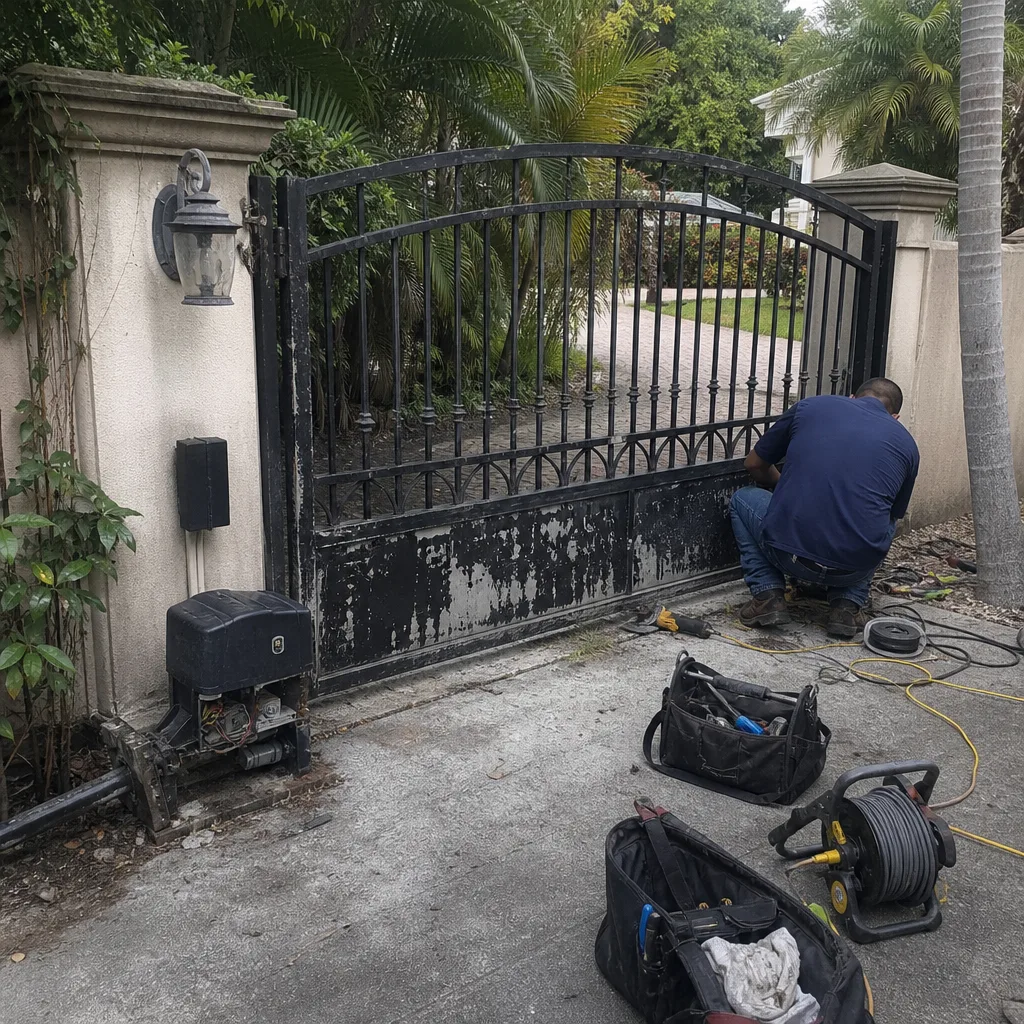 Before
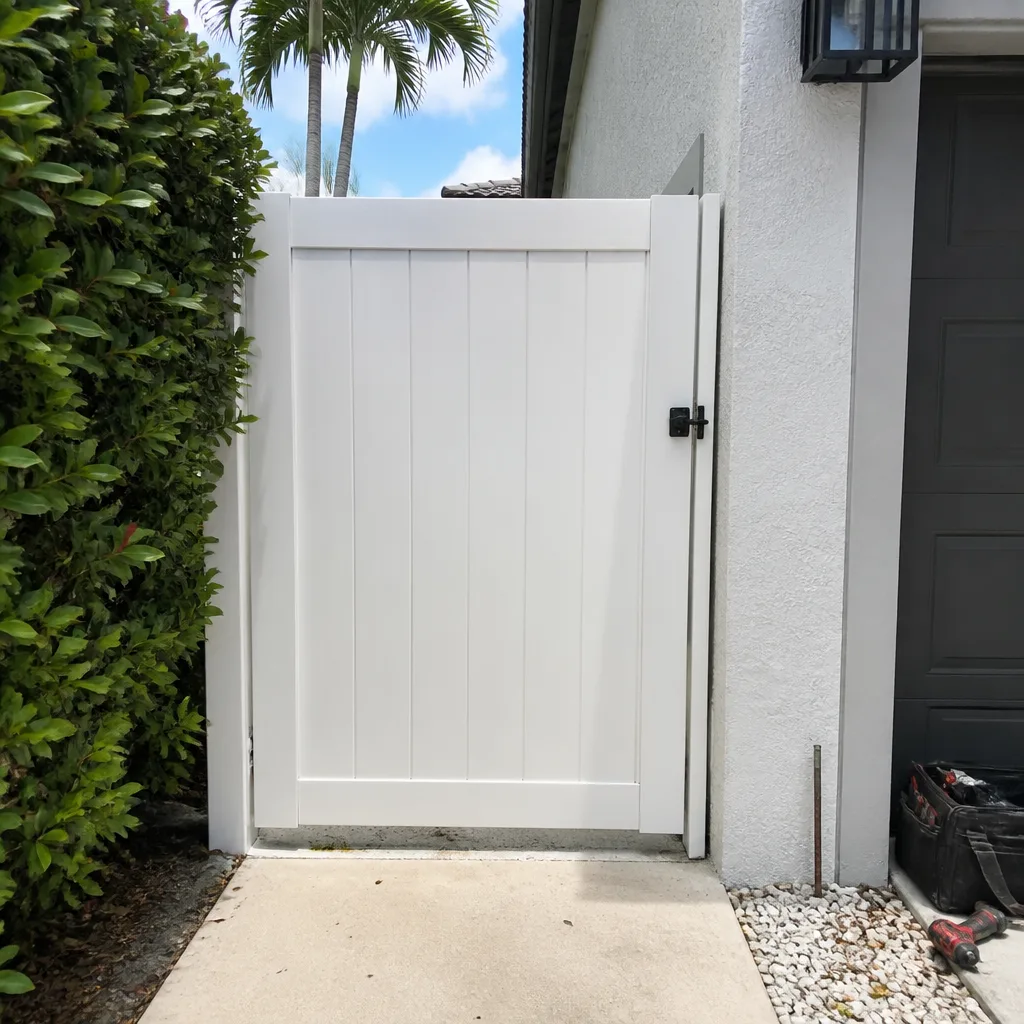 After
After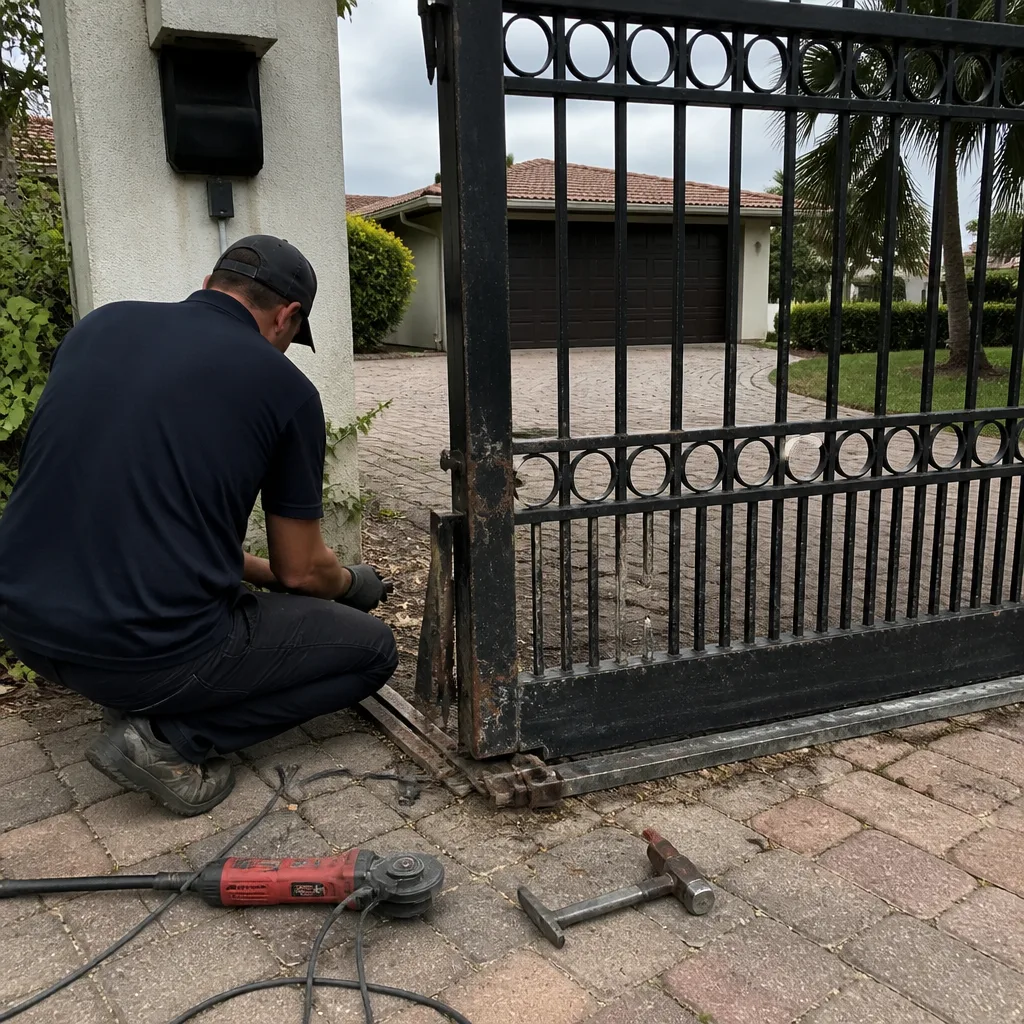 Before
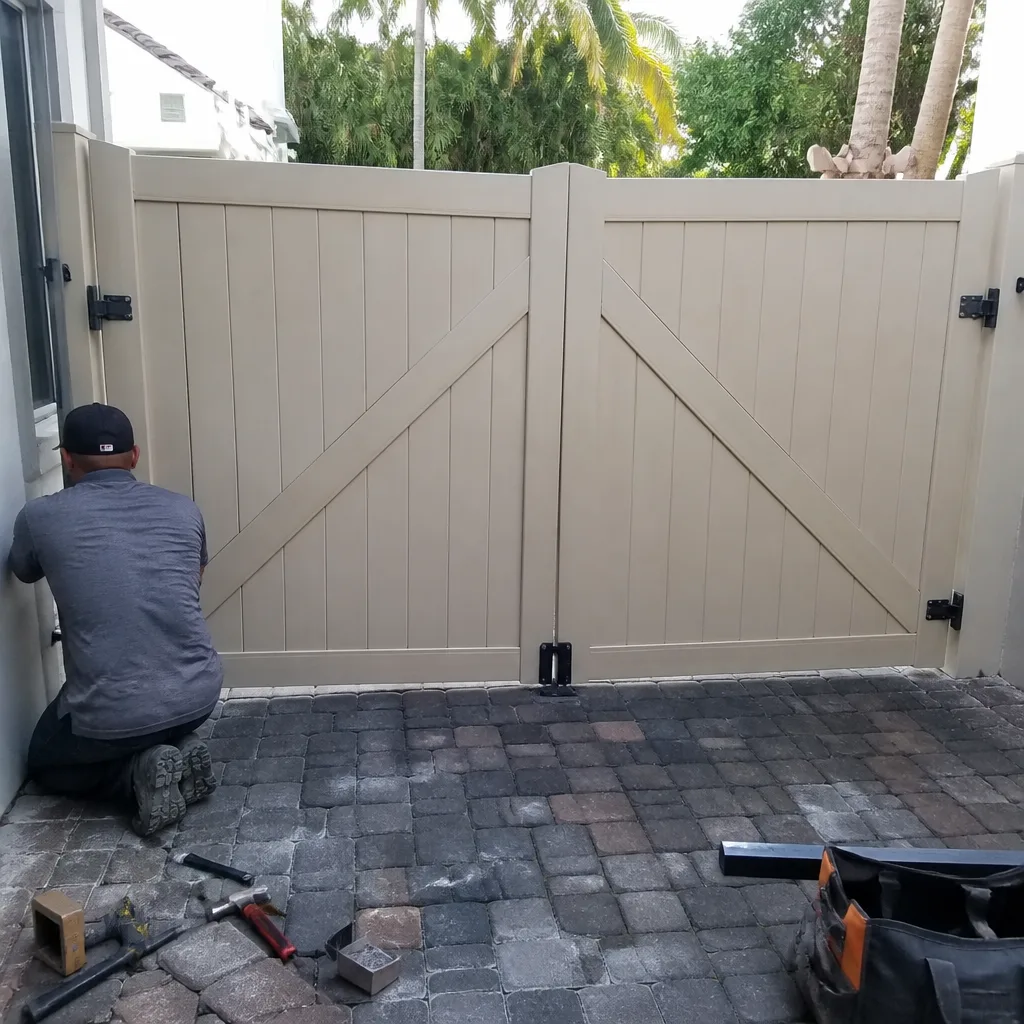 After
After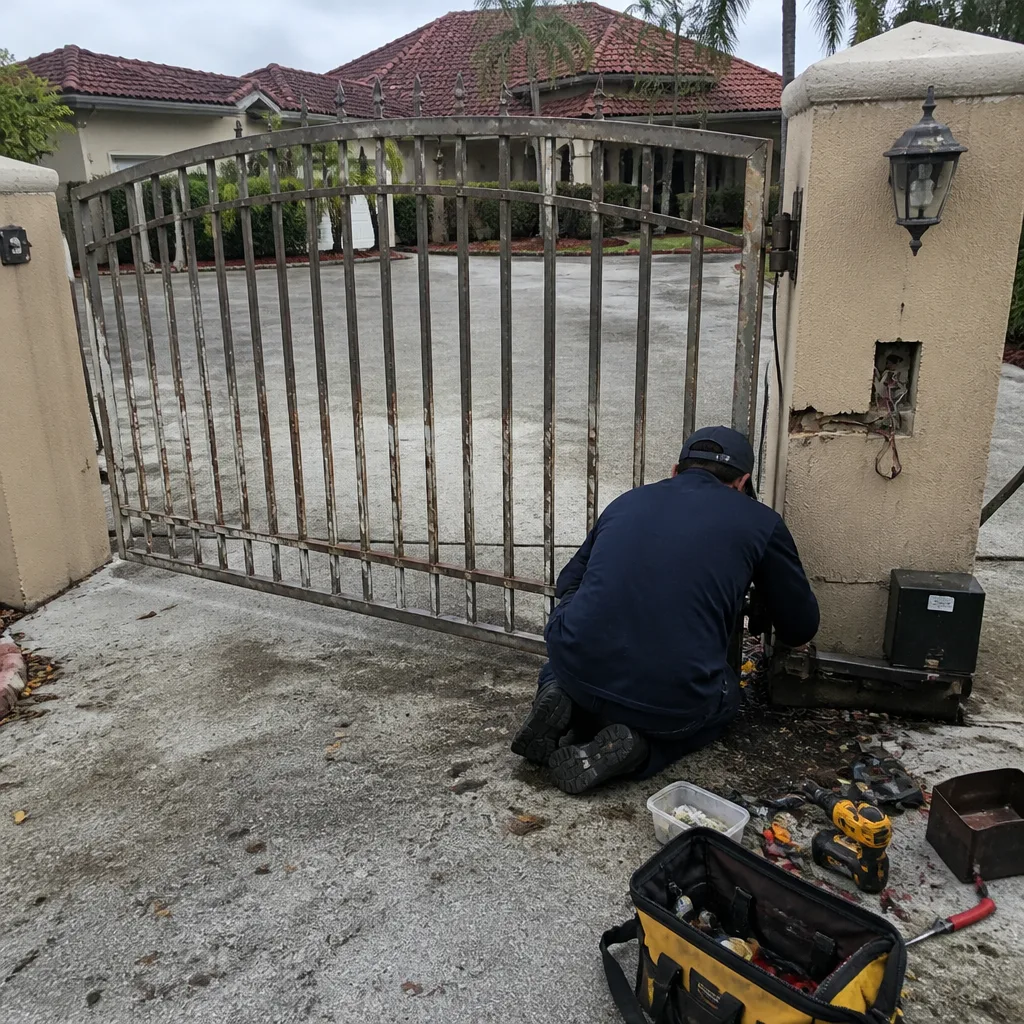 Before
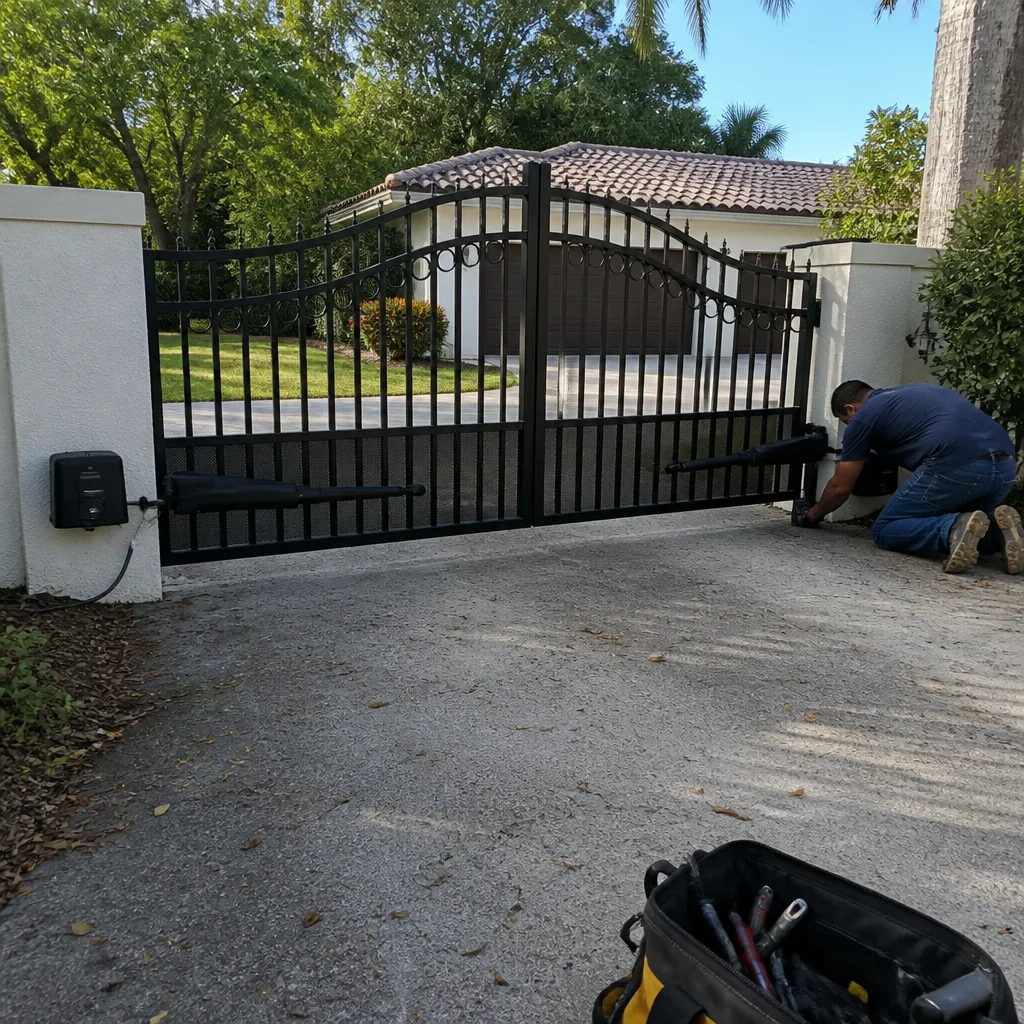 After
AfterWhen to Call a Professional
Some conditions on a gate are maintenance items. Others are repair items, and the line between them matters. Call a professional when you see a crack in a weld, a hinge that binds despite correct lubrication, a gate that sags visibly, a safety sensor that fails its test, a loop detector that behaves inconsistently after rain, or an operator that faults repeatedly. These are not conditions that improve with another round of cleaning and tightening. Carver Gate Repair West Palm Beach offers free estimates in West Palm Beach. Call (728) 203-2413, and a live person answers, any hour, any day.
Frequently Asked Questions
Lubricate hinge pins, roller bearings, and operator arm pivot points every three months, using a marine-grade synthetic lubricant, not white lithium grease. The quarterly schedule keeps a thin protective film in place without building up the grit-attracting layer that causes problems in this sandy, humid environment. If you live within a mile of the Intracoastal or the ocean, consider shortening the interval to every two months during summer, when salt air is heaviest. For a precise recommendation on your gate, call (728) 203-2413 and describe your setup.
A basic gate maintenance visit in West Palm Beach typically runs $85 to $150, depending on the gate type and operator. A comprehensive annual check that includes battery testing, sensor verification, and limit switch adjustment typically runs $150 to $250. Any repair work found during the visit carries a written quote before work starts. Carver Gate Repair West Palm Beach provides free estimates, so you will know the number before any work begins. Call (728) 203-2413 to schedule.
Yes, Carver Gate Repair West Palm Beach dispatches for same-day service when a gate failure is urgent, and phones are answered by a live person 24/7. Gate failures that leave a property unsecured or a vehicle trapped inside are treated as priority calls. Call (728) 203-2413, describe the symptom, and a technician will be routed to you with a written price provided before any work starts.
Yes, especially in West Palm Beach, where summer thunderstorms and tropical systems cause frequent power interruptions. A functioning battery backup keeps your gate operating during an outage, which matters for evacuation routes and everyday access. Test the battery under load annually, and replace it when rest voltage drops below 12.4 volts on a 12-volt system. If you are not sure how to test yours, a technician can check it in under ten minutes.
Test them by starting the gate closing and passing your hand through the photo eye beam while standing to the side. The gate should stop immediately and reverse. If it continues closing or only hesitates, the sensor or its wiring needs repair. A safety edge should be tested the same way by pressing on the edge strip while the gate closes. Sensor repairs are not DIY work, given the electrical and programming involved.
The biggest difference is corrosion management. In West Palm Beach, salt-laden air deposits a film on metal hardware that inland gates never see, and that film accelerates rust and zinc plating failure. The second difference is heat, which shortens operator battery life and stresses control boards. Maintenance in this climate is less about preventing weather damage than managing its rate, which is why the specific lubricant and the annual battery test matter more here than they would in a drier, cooler market.
The Bottom Line
A gate in West Palm Beach needs a maintenance routine built for salt, humidity, heat, and storm season, not a generic checklist copied from a dry-climate guide-see our more guides & resources for climate-specific advice. Check hinges, rollers, and sensors monthly. Clean and lubricate quarterly with a marine-grade product, not white lithium. Test the battery backup, loop detector, and safety sensors annually before hurricane season. Document everything with dates and photos. When a check turns up a fail on a structural or electrical item, call a professional before it becomes an emergency. Carver Gate Repair West Palm Beach handles gate repair, gate installation, and gate motor repair across West Palm Beach, with written prices, background-checked technicians, and a full-year guarantee on every repair. Call (728) 203-2413 any time. A live person answers.
Written by Lonnie Burke, Owner at Carver Gate Repair West Palm Beach, serving West Palm Beach since 2008.